Raise Funds for Your Organization While Supporting the Families Who Support You
Create Family Institute brings the missing family education to organizations that already serve families. You bring the reach. We bring the system. Your community gets the education that was never replaced and the earnings.
BRING THIS TO YOUR COMMUNITY
YOUR COMMUNITY · OUR CURRICULUM · EARNINGS EVERY MONTH · NO PROGRAM TO MANAGE

Your Community
Our Curriculum
Every community funds itself through the people already in it.
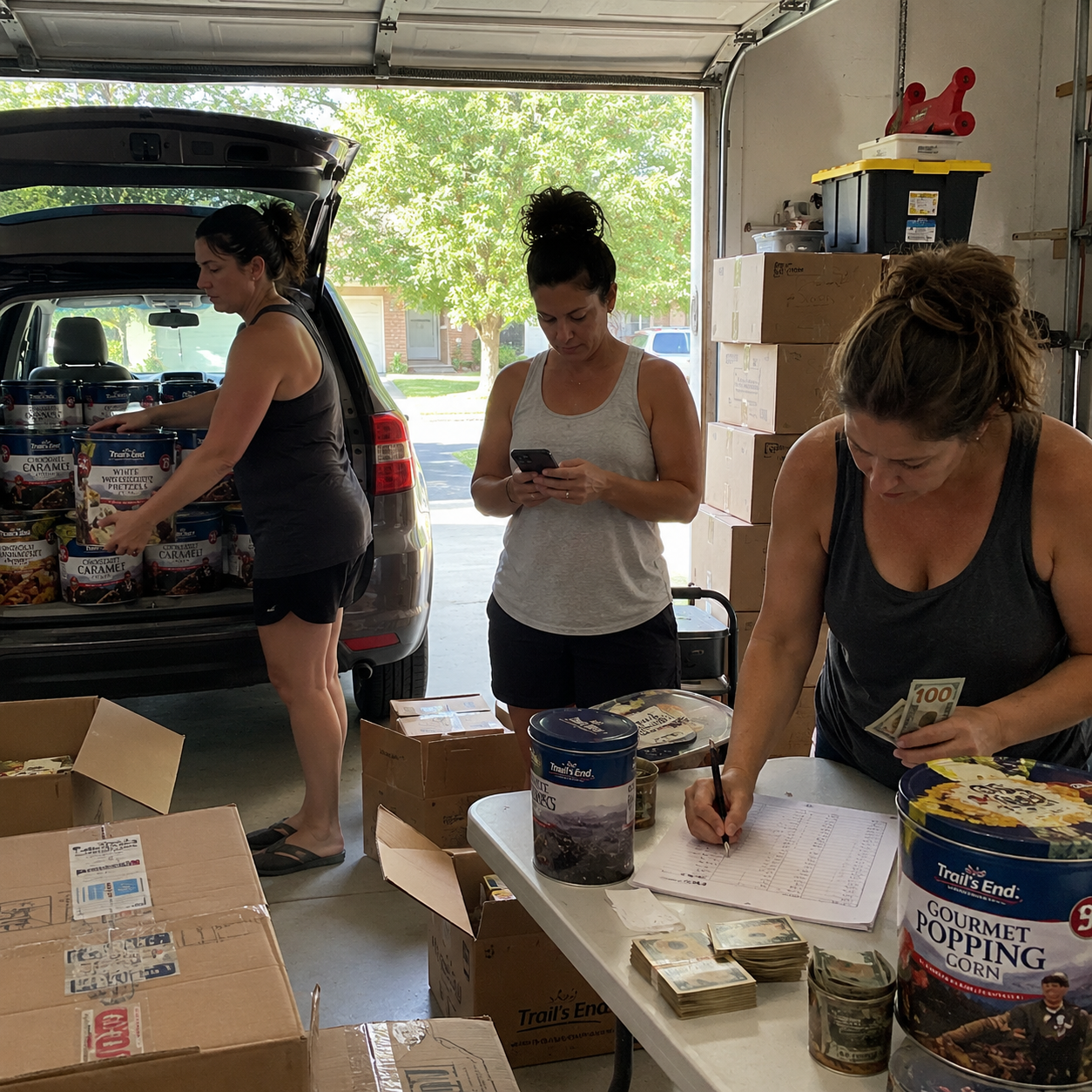
A gala works because the community buys the tickets. A popcorn drive works because families give up their weekends to sell it, table after table, box after box. However it happens, the money was always coming from the same place, the people who already believe in what the organization is doing.
That has never been the problem. The problem is what those families get in return. A ticket. A tin of popcorn. A thank you note. The organization gets funded, and the family goes home with nothing but the hours they spent.
Create Family Institute built Give & Grow to ask a different question. What if the same families already funding their community could get something back that actually mattered, real education for running their home, not another product to sell?
Successful Fundraisers Are Moving Away From One-Time Asks
Recurring giving is not a new idea. It is where the strongest fundraising programs have already gone, because it is what actually keeps donors coming back.
90%
of nonprofits now offer recurring giving as a standard option, not an afterthought.
A decade ago this was rare. Today it is close to universal among organizations that fundraise seriously.
71%
of recurring donors are still giving a full year later.
That is not a lucky year. That is a relationship an organization can actually plan a budget around.
24%
of donors acquired through a single campaign ever give again.
The popcorn table outside the supermarket is not the problem, it works. The real question is what it could earn if that same effort kept going after the table comes down.
Source: M+R Benchmarks 2025 and M+R Benchmarks 2026, an annual study of nonprofit digital fundraising performance.
The Communities We Serve
These are the communities already doing the work of holding families together. Create Family Institute exists to make that work a little lighter, and a little stronger, for every one of them.

Military Family Organizations
Every homecoming rests on someone who held the family together in between.
Schools & Parent Groups
A school runs on parents who keep showing up, table after table.

Faith-Based Communities
Behind every strong family is a mom who was never meant to carry it alone.

Nonprofits & Mission-Driven Organizations
Every family deserves direction,
whatever that family looks like.
How Give & Grow Works
There is no fundraiser to plan and no product to sell. Just six simple steps between where your organization is today and the first month your families start earning for you.

Step 1: Bring It to Your Community
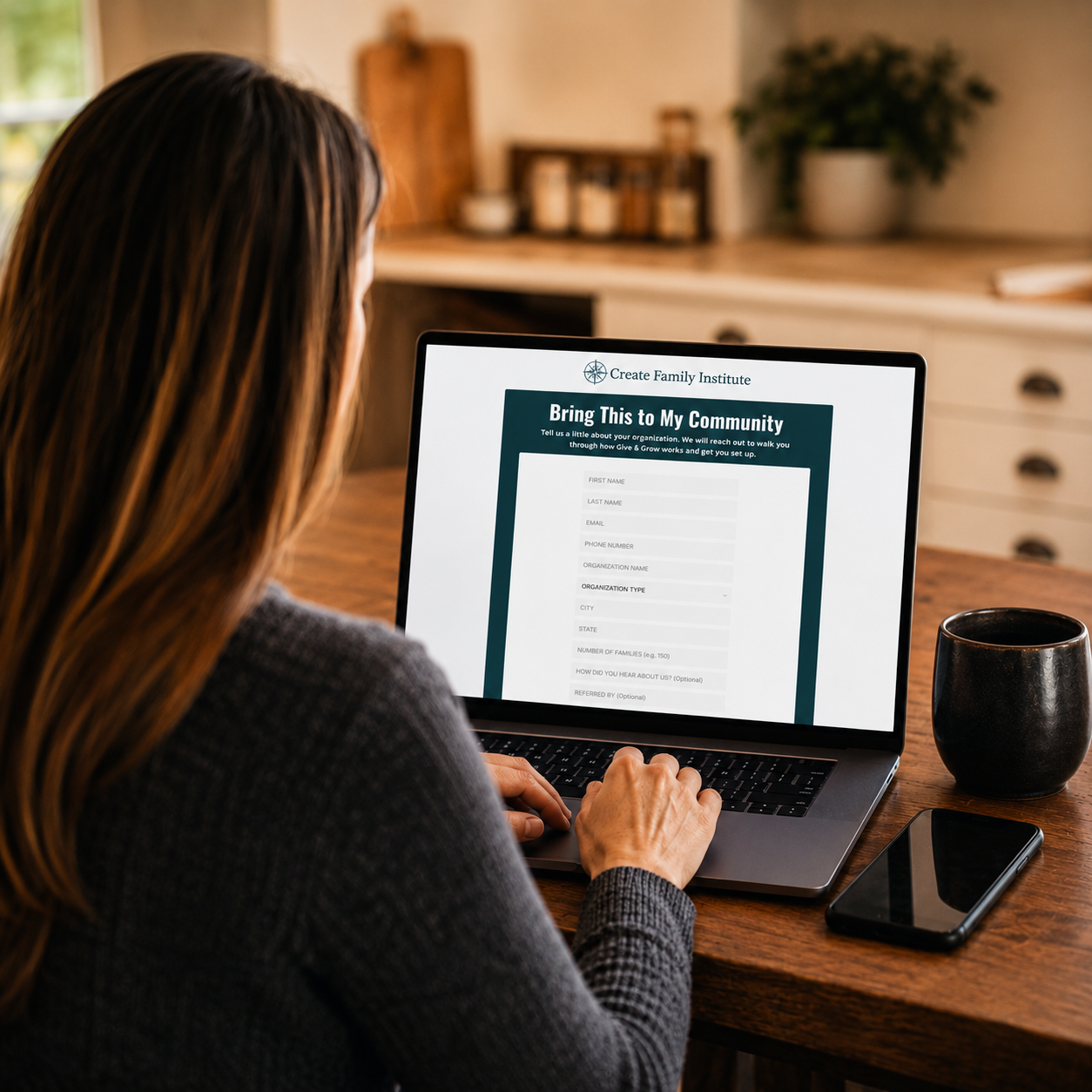
Fill out the form and tell us about your organization. We will walk you through how Give & Grow works and get you set up.
Step 2: Get Your Link
Your organization receives its own unique link. This is how every family who joins gets tracked back to you, and how your earnings get calculated automatically.

Step 3: Share It With Your Families
Send the link out however your community already communicates, email, a newsletter, a group text. No event to plan, no product to distribute, no table to staff.
Step 4: Families Subscribe and Start With the Assessment
Each family that joins begins with the Family Strength Assessment, a diagnostic that shows exactly where their household stands, then builds their Family Vision from there.


Step 5: One Course a Month, Every Month
From there, each family receives a new course every month, ten in total, each one producing a written plan for a different part of family life. Create Family Institute runs all of it, the lessons, the emails, the support.
Step 6: Your Organization Earns
Your organization earns 50 percent of every family subscription, fixed, every month, for as long as that family stays. Nothing to manage, nothing that resets.

Everything a Parent Needs
One Subscription
One flat price covers all of it, the assessment, the full curriculum, and every written plan a family builds along the way. Nothing gets held back for a higher tier, and nothing extra shows up later.
Family Strength Assessment
A 60-question household diagnostic across 10 categories. Produces a personalized PDF report and routes the parent to the course with the most immediate impact.
The Create Family System
Build Your Family Vision plus a sequenced curriculum covering every area of family life. Each course produces one written plan the parent keeps and uses.
One Course Every 30 Days
Courses release monthly so parents have time to apply what they learn before the next course unlocks.
Written Family Plans
Every course produces one written plan. By the end of the curriculum the parent holds a complete written foundation for how their family operates.
Parent Subscription
$29.00
See What Your Organization Could Earn
Every family who joins through your link becomes a recurring source of support for your organization.
Based on a $29 monthly family subscription, with your organization earning 50%, fixed, at every size. Earnings continue for as long as families stay subscribed, with no product to sell and no inventory to manage.
Bring This to My Community
Tell us a little about your organization. We will reach out to walk you through how Give & Grow works and get you set up.
Results From Real Families
Not projections. Not estimates. This is what actually happened when families went through the program.

Structured Pilot Cohort
22 Caregiver Participants | 6 Months
100% participation across the full pilot period.
100% verified strategy adoption, pre and post validation.
0% attrition.
Delivered over six months to parents carrying the dual demands of employment and household operation. The dual-income household is the most common and underserved family environment in the American workforce. CFI curriculum was validated under real conditions with no outside support or additional time required.
Military Family Delivery
3rd Special Forces Group | 69 Responses
88% of families reported the session was beneficial to their household. 91% found the topic directly relevant to their community.
CFI curriculum was delivered live to active duty 3rd Special Forces Group families at Mettle and Moxie, a private family weekend hosted by Special Forces Trust. The U.S. military community operates under sustained household pressure with no margin for error. This is an environment where household stability is not aspirational. It is mission critical.